
Improving Child Care Access for Eligible Families
Situation
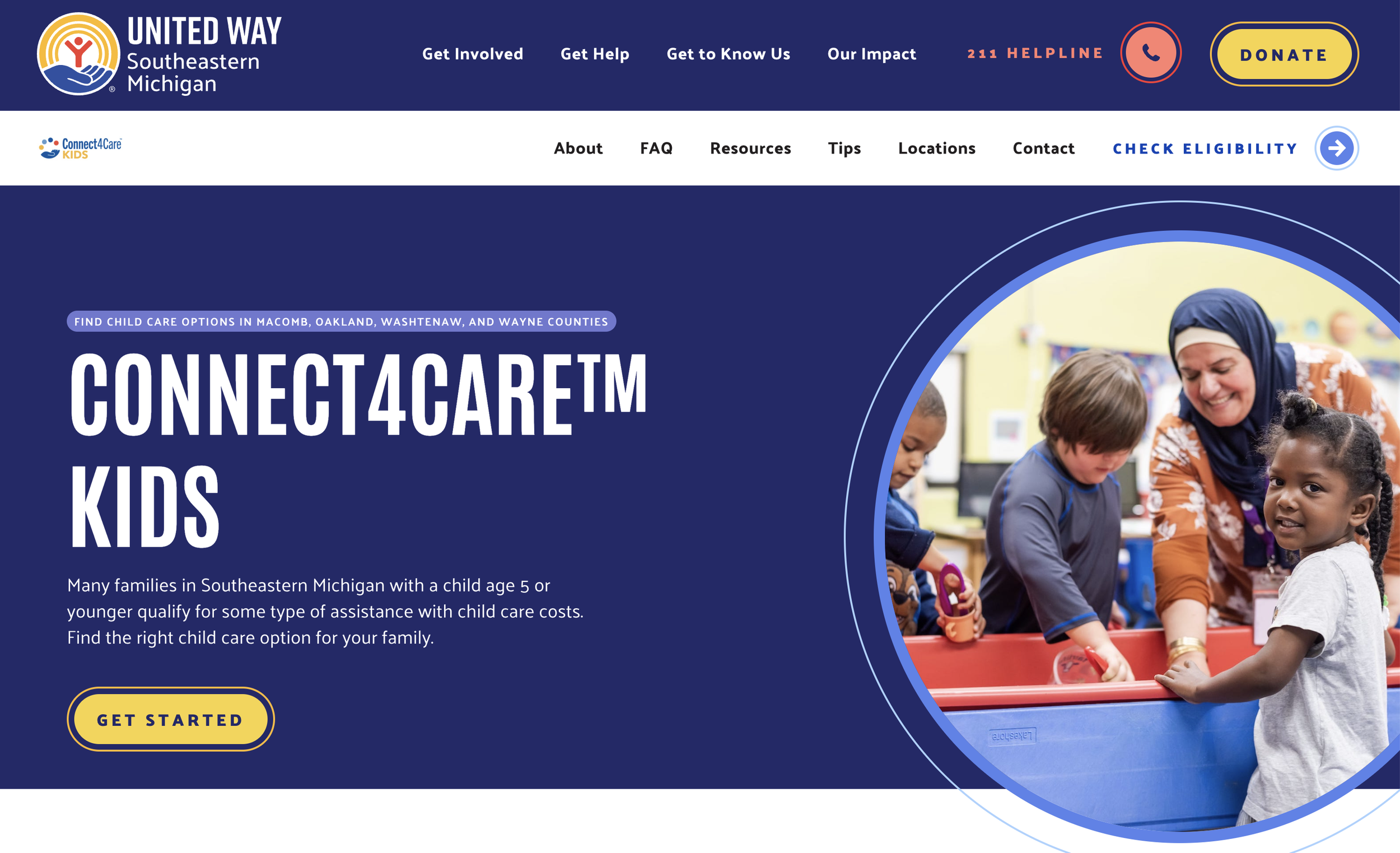
More than 75% of Detroit families are eligible for some type of child care assistance. Too many weren't accessing it. The city had a 23,000-slot gap in licensed child care, only 27% of providers participated in the quality rating system, and most didn't offer the full-day, full-year care working families needed. United Way and the City of Detroit were building a digital platform to connect families with programs and financial assistance.
Complication
The existing process for finding child care required significant effort at every step. Families started by asking friends and family, then called centers only to find disconnected numbers. They visited care centers in person, filled out applications with requirements that varied by location, and waited on lists for months. If a child aged out of one program, the family started over. The families with the most to gain from assistance had the least capacity to navigate the process.
What I Did
Eligibility Landscape Research
I analyzed child care supply and demand in Detroit: which neighborhoods had the greatest gaps, where quality-rated providers were concentrated, and how different program types overlapped or left gaps. The 10 highest-need neighborhoods accounted for 51% of the total slot deficit.
Family Experience Research
I conducted journey mapping and listening labs with caregivers to understand what searching for child care actually looks like in Detroit. I mapped the full "care shopping" process and documented the friction, workarounds, and emotional toll at each stage.
Usability Testing
I tested the platform with 13 caregivers across browser and texting tool interfaces. This included sessions in Spanish and Arabic to reflect the communities the platform would serve. The tool performed well on usability: 11 of 12 rated it as meeting or exceeding their needs, and all would recommend it. But testing also surfaced a finding the team had not anticipated. The platform's quality rating filter made program quality visible to families for the first time. When caregivers filtered by 3 stars, half the options disappeared. They questioned why low-rated programs were listed at all. The system was measuring quality using state criteria. Families experienced it as a reason to worry.
Provider Satisfaction Research
I surveyed child care providers to understand the other side of the marketplace: how they experienced enrollment leads, what their capacity constraints looked like, and how the platform could create value for them.
Impact
Scope sharpened - Research redirected the platform from comprehensive journey coverage to the two highest-value entry points: provider discovery and eligibility determination
Quality disconnect surfaced - The platform exposed program quality ratings to families for the first time. Caregivers and providers experienced quality information differently, creating a design problem the team needed to address before launch.
Both sides of the marketplace researched - Caregiver journey mapping and provider surveys surfaced misaligned expectations and capacity constraints
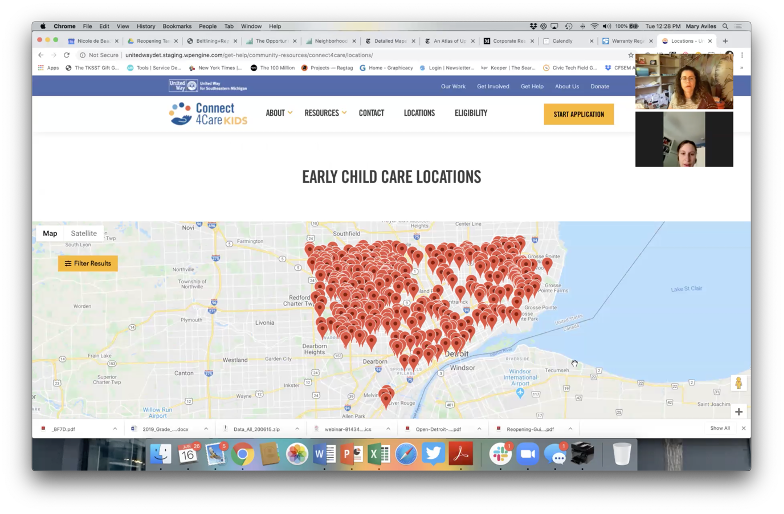
Launched and expanded - Service launched in Detroit with validated scope, language accessibility framework, and user-driven enrollment approach. Eventually expanded to all of Wayne, Macomb, Oakland, and Washtenaw counties.
Methods & Deliverables
Eligibility landscape analysis | Caregiver journey mapping | Listening labs | Concept testing | User experience testing | Accessibility testing | Provider satisfaction survey